"I went to Jerusalem to become acquainted (Gk. istoria) with Cephas" - Paul's words from Galatians 1:18.

Thursday, December 24, 2020

Merry Christmas to Your Family! Shiloh Has Come!

Christmas 2020, Main Street, Waukomis, OK
What makes your heart sing and your mind smile this Christmas? A Christmas bonus? Family coming home for Christmas? Days off from work? 

When I wish someone Merry Christmas, my mind generally thinks: “Merry Christmas: Shiloh Has Come!” (truthfully, that is what I think!)

Let me explain. The Old Testament is full of amazing prophecies foretelling the advent (coming) of the Messiah into the world. Those prophecies are fulfilled in minute detail in the Person of Jesus from Nazareth. 

That is why Jesus is called the Christ, for Christos in Greek means Messiah. Christ is not Jesus’ last name; Christ is the title of Jesus.

Jesus is the Messiah. He is Jesus Christ. 

The Hebrews (Jews) had another title for the Messiah in their Scriptures. They used Shiloh as a synonym for Messiah.  Shiloh means “peace or rest.” The Messiah would be the Prince of Peace, the King of the World, and Shiloh would usher into this world a Kingdom known for its righteousness, justice, and peace.

Jesus is Shiloh. 

Shiloh has come. 

One of my favorite prophecies about the coming of the Messiah is found in Genesis 49:10.

The scepter shall not depart from Judah, nor a lawgiver from between his feet, until Shiloh comes, and to Him shall be the obedience of the people.
For the longest time, I had little understanding of this prophetical utterance from Jacob, a prophecy of the Messiah that Jacob gave to his twelve sons as he lay dying. 

Throughout the Old Testament, Messianic prophecies are given hundreds and even thousands of years before their fulfillment in Jesus. That is why fulfilled Messianic prophecies of the Bible are a great source of encouragement to Christians. They confirm the God-inspired nature of Scripture, they impress on the reader the centrality of Jesus Christ and they give us a boldness to share the story of Jesus with those who think Christianity is just one of many other comparable religions. 

No other “religious” books but the Bible, including the Koran, the Book of Mormon, and any other religious book you can mention contain one prophecy of a future event that was fulfilled hundreds of years later. The Bible has hundreds. Don’t make the mistake of ignoring biblical prophecies that have been fulfilled for an infatuation with a few biblical prophecies that have yet to be fulfilled. 

We are all familiar with other Old Testament Messianic prophecies fulfilled in the life of Jesus, such  as: 
1. The Messiah would be born in Bethlehem — (Micah 5:2).
2.  The Messiah would be born of a virgin — (Isaiah 7:14). 
3. The Messiah would be existent before His birth — (Micah 5:2). 
4. The Messiah would suffer and die for His people by crucifixion — (Isaiah 53:12). 
5. The Messiah would become the righteousness of His people — (Jeremiah 23:6).
But this Genesis 49:10 prophecy, “The scepter shall not depart from Judah, nor a lawgiver from between his feet, until Shiloh comes has become my favorite. 

Jacob foretold when Shiloh (the Messiah) would come. Let me try to help you understand this prophecy by focusing on four keywords or phrases: 
Shiloh — is the Jewish idiom (or name) for “the Messiah,” and was often used by ancient Jewish writers in place of “the Messiah.” 
Judah — is the name of one of Jacob’s sons, but even more importantly, Judah became the name of the entire Southern Kingdom of Israel, the nation of Judah.
Sceptor — is the tribal staff or the tribal identity of Judah. Its modern equivalent would be our “national flag” that would cease to exist if we were captured or conquered as a nation. 
A lawgiver from between his feet — is the ability of Judah (or the Southern Kingdom of Israel) to apply and enforce the Mosaic laws by means of capital punishment (death) for disobedience. Throughout the history of ancient nations, kings sat on throne with the nation’s laws “under his feet,” symbolizing the king’s power to punish lawbreakers. In essence, for Judah to have a “lawgiver between his feet” was an idiomatic expression that spoke of the nation of Judah’s ability to adjudicate and administer capital punishment for violations of the Mosaic laws. 
Using the above definitions, a simple descriptive translation of Genesis 49:10 would be as follows:
“The national identity of Judah shall not depart from Judah, nor the ability to enforce Mosaic law, including the right to administer capital punishment shall leave Judah, until Shiloh comes.” (Genesis 49:10).
Two questions must now be asked: 

(1). WHEN did JUDAH lose her national identity? 
(2). When did JUDAH lose the right to administer capital punishment? 

According to Genesis 49:10, if you can identify those two dates or occasions, you will know that Shiloh has come. 

In AD 70, the Roman army tore down the Temple of YHWH, destroyed the capital city of Judah (Jerusalem), and scattered the Jews all over the Roman empire (e.g. the diaspora). In AD 70, Judah ceased to exist as a nation. 

BUT Judah’s national leaders lost their ability to administer capital punishment for violations of the Mosaic law about 40 years earlier (in  AD 30).  The Romans took the “lawgiver ability” away from Judah in 30 A.D., BUT they allowed Judah to retain her national identity. 

The loss of the right to administer capital punishment for law offenses is why Jewish leaders brought Jesus before Pontius Pilate, the Roman governor of Judah.
 
A little more than forty years before the destruction of the Temple, the power of pronouncing capital sentences was taken away from the Jews. The Talmudfolio 24
Even the Jews themselves understand the significance of this loss to administer capital punishment on their own:
Woe unto us for the scepter has departed from Judah and the Messiah has not come.The Sanhedrin as recorded by the Babylonian Talmud, Ch. 4, folio 37.
 
But Shiloh already had come.

Just a few years before Judah lost her ability to adjudicate and administer capital punishment, God revealed His Son, our Messiah, at Jordan. The heavens opened and God declared, “This is my beloved Son, in whom I am well pleased” (Matthew 3:16). 

It was then Jesus’ public ministry began. Three years later, on the Mount of Transfiguration, God reiterated what He’d said of Jesus at Jordan and added this command to those who followed Jesus: “Hear Him!” The Greek words acoute auton, translated “Hear Him” literally mean “Listen to Jesus and do as He says.” Don’t just hear the King; do as the King commands.

Shiloh has come. 

Jacob, under the inspiration of the LORD, gave his Shiloh prophecy nearly two thousand years BEFORE YHWH split the heavens and sent His Son, Jesus the Messiah, to be born of a virgin in the little ancient town of Bethlehem. 

Jesus is Shiloh. Just like the prophecy predicted, Jesus arrived on earth prior to the loss of Judah’s ability to administer capital punishment (30 AD) and prior to Judah’s loss of national identity (70 AD). 

Our sins are forgiven because — Shiloh has come. 

Our lives have meaning because — Shiloh has come

Our Bible can be trusted because — Shiloh has come.  

As C.S. Lewis so eloquently stated: 
“You must make your choice. Either this man was and is the Son of God: or else a madman or something worse. You can shut Him up for a fool, you can spit at Him and kill Him as a demon; or you can fall at His feet and call Him Lord and God. But let us not come with any patronizing nonsense about His being a great human teacher. He has not left that open to us. He did not intend to.”
Merry Christmas! 

Shiloh has come. 

Monday, December 21, 2020

“A Smile of the Mind Is a Gesture from the Soul” – Helen Keller after Reading the Lips of Mark Twain

Helen Keller and her teacher, Anne Sullivan
Helen Keller
(b. 1880 – d. 1968) became very ill when only nineteen months old with either Scarlet Fever or Meningitis, two diseases now treatable in 2020, but often fatal in 1882. Helen survived, but a few days after Helen’s fever broke, her mother noticed that Helen wasn’t responding when the bell was rung for dinner, or when a hand was waved in front of her face. Helen had gone deaf and blind.

The family consulted with Alexandar Graham Bell (1847-1922), the inventor of the telephone and a pioneer in communicating with the deaf. Bell arranged for Anne Sullivan (1866-1936), a teacher from Perkin’s School of the Blind, to travel to Helen’s home to become the little girl’s teacher. 

Helen called the day Anne Sullivan arrived in her life “the most important day I remember in all my life.” Anne met Helen in March 1887, when Helen was not quite seven years old. Only fourteen years older than Helen, Anne herself was visually impaired and had just recently graduated from the school of the bind.

Before long, Anne Sullivan had taught Helen ‘finger spelling’, which allowed her to finally communicate with those around her. To do this, Anne gave Helen an object such as a doll and traced the word ‘d-o-l-l’ onto her palm.

In the beginning, Helen did not make the connection between the letters on her palm and the objects. But the famous moment came when Anne took Helen to the water pump outside and while spelling “w-a-t-e-r” into Helen’s palm, allowing the water to run over Helen’s other hand. Comprehension dawned in Helen’s mind. The little blind and deaf girl quickly knelt and touched the earth and held out her hand, demanding her new teacher to spell the earth’s name in the form of letters. By nightfall, Helen had learned 30 new words.

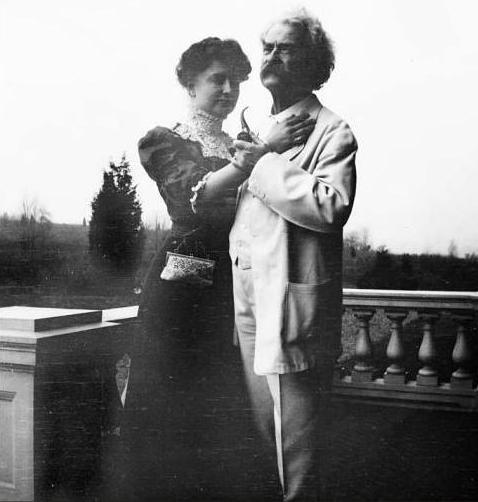
Mark Twain in his octagonal study
Anne Sullivan became Helen Keller’s life-long teacher.  Anne was present when Helen Keller would visit her life-long friend, writer Mark Twain, in both his Connecticut home and his octagonal study in Elmira, New York, where he would write some of his classic works, including Tom Saywer. 

Keller later wrote a vivid description of her interactions with Mark Twain:

“To one hampered and circumscribed as I am it was a wonderful experience to have a friend like Mr. Clemens. I recall many talks with him about human affairs. He never made me feel that my opinions were worthless. . . . He knew that we do not think with eyes and ears and that our capacity for thought is not measured by five senses. He kept me always in mind while he talked, and he treated me like a competent human being. That is why I loved him. . . . There was about him the air of one who had suffered greatly.”

Of course, being deaf and blind, Helen Keller could only understand what Mark Twain said by feeling his lips and throat with one hand and having her teacher, Anne Sullivan, translate what Twain said by writing it in the palm of Helen’s other hand. Listen to Helen Keller’s vivid description of Mark Twain speaking:
“Whenever I touched his face his expression was sad, even when he was telling a funny story. He smiled, not with the mouth but with his mind—a gesture of the soul rather than of the face. His voice was truly wonderful. To my touch, it was deep, resonant. He had the power of modulating it so as to suggest the most delicate shades of meaning and he spoke so deliberately that I could get almost every word with my fingers on his lips. Ah, how sweet and poignant the memory of his soft slow speech playing over my listening fingers.”

Keller feeling Twain’s “smile of the mind”
I love Helen Keller’s description of Mark Twain:

“He smiled, not with the mouth but with his mind–a gesture of the soul rather than of the face.” 

I always want to be a person who smiles at others with my mind. I work to accept others where they are, for who they are, as they are. 

My personal motto is “Sometimes offends, never offended.” That describes a principle by which I live. Nobody can live as long as I, be involved with as many people as I, and not sometimes offend other people.  I pay little attention to whether I offend others, but I pay great attention to ensure that others’ words, actions, and attitudes never offend me, regardless of what they say, do, or feel.

This week, I encourage you to concentrate on smiling with your mind even more than smiling with your lips.

The smile of the mind is the token of God’s grace in the soul.

Tuesday, December 15, 2020

Istoria Ministries Seeks to Discover Story Origins

I am President of a 501C-3 non-profit called Istoria Ministries. Friends helped me start this non-profit nearly a decade ago. Its purpose is to help people discover how their stories integrate with the Person and work of Jesus Christ so that His Story becomes all of our stories. 

That’s a long way of saying I write to promote Christ and His Kingdom.

I like to find out about people – where they come from, why they are the way they are, and what circumstances have contributed to the place they’re in right now. Every person’s story is unique, for God makes each of us unique, but the story of Christ is for everyone. My goal is to offer some spiritual encouragement to people who need some direction in their marriage, their career, or their life. 

I’ve been asked before to give a visual of what Istoria Ministries is about. So, here goes. 

Have you ever watched a movie made by Metro-Goldwyn-Mayer (MGM? You know it’s an MGM movie because of the 8-second introduction with a lion roaring inside the MGM logo (see below).

via GIPHY

I work through Istoria Ministries to find out the story of the lion (or as is true in my writing, the stories of real people). Who is he/she? What is his/her background? Why has God placed this person in my sphere of influence at this time?

By the way, the lion’s name is Jackie.

Below is an MGM photo of the MGM logo of the roaring lion being filmed in 1928. This shoot is the movie clip that you at the beginning of every MGM movie, even 92 years later. 


Jackie was brought to the United States from Sudan. MGM began using a recording of Jackie for the beginning of their “talking” movies – impressing patrons with the roar of Jackie since they had never heard “sound” in the silent movies of the 1920s. Jackie’s roar was the first thing heard by moviegoers in the first “sound” movies. The studio actually had to build a sound stage around his cage in order to record his roar.

Now you know the rest of the story!

I tell people about the Lion of the Tribe of Judah and how He can change their lives. 

I want to thank those who have supported Istoria Ministries over the years. I’ve never drawn a salary from Istoria, but donations have helped with research, travel, and giving books away to those who write to Istoria with a prayer need or a request for spiritual encouragement. One day I will be retiring from pastoring to focus on writing full-time and Istoria Ministries will be my means of support so that I can write books that may not be a commercial success, but will all about the story of Christ and His work on our behalf and how His Story can change the trajectory of our stories!

The Face of Grace, the newest book, was just released this week. I look forward to many more books in the years to come! Thank you for your support!


Saturday, December 12, 2020

Identity. Who Am I? BERT. GOD Knows. I Believe.

You are not on this page by accident.

You’re searching for your identity. You feel fragile. You think you know who you are. But… when you think about it – when you really think about identity – you’re more concerned about who others think you are than discovering who you really are

Happiness is elusive. You’re wanting meaning to life; significance; purpose. But your search for self has been a journey into other peoples’ minds, not your own. 

Your search has landed you here – on this page. 

Thank you BERT.  The natural language processing program for GOOGLE knew that you were looking for answers to identity when you typed a search.

Read the story of Becket Cook. He’ll help you find the truth.

You’re a sinner. Searching for being “okay” in the eyes of others has caused you to call sacred omething that God calls sin

But you’re not alone. 

The search for identity is no different for the business executive who retires and can’t find himself in anything other than work than it the one who can’t find himself in broken relationships. The depression, the darkness, the difficulties are the same. 

Jesus Christ can change everything about your life. “You shall call His name Jesus, for He shall save His people from their sins.” (Matthew 1:21). 

As the old country and western song accurately stated, I Was Lookin’ for Love in All the Wrong Places

Becoming convinced of Christ’s love will change the way you live. “Therefore, if anyone is in Christ, he is a new creation; old things have passed away; behold, all things have become new” (2 Corinthians 5:17).

Surrender your life to Jesus Christ, and He’ll give you an identity that transcends this world and carries you to the next.

Email me at [email protected] and Istoria Ministries will send you a free copy of the book Happiness Doesn’t Just Happen

Thursday, December 10, 2020

The Spirit of Fear Is Never Your Friend Till It Flees

The Importance of Local Government In Your Life

Take a quick 10-question test and see how you score:

1. Tell me the name of your local police chief. 

2. Tell the name of your county sheriff. 

3. Tell me the city council district number in which you reside. 

4. Tell me the name of your representative city councilor. 

5. Tell me the total number of city councilors in your city.

6. Tell me the name of your mayor.

7. Tell me the name of the head of your city’s code department.

8. Tell me the name of your District Attorney.

9. Tell me where you can find your city’s charter.

10. Tell me when your next local election will be held.

If you can’t answer at least 8 of the 10 questions, your city or community may be facing imminent troubles, and you may be part of the problem.

When it comes to government, the most important government in your life is LOCAL, not FEDERAL.

Why? Because local officials take the same “oath of office” that federal officials do.
I, _____, do solemnly swear [or affirm] that I will support the Constitution of the United States and the Constitution and laws of the State of Oklahoma, and all local ordinances, and that I will faithfully and impartially perform and discharge the duties of the office of _____, according to the law and the best of my ability.


Let’s say a new President signs an Executive Order that private citizens can no longer own guns.

Your local sheriff and police chief have the authority to defy this unconstitutional mandate. In 2019, a sheriff named Bob Song in Washington State, said the following to National Public Radio about attempts to remove guns from local citizens. 

“As an elected sheriff and a constitutional sheriff, I believe it violates the Second Amendment of the U.S. Constitution,” he says, “and, more specifically, violates the Washington state Constitution.” Songer adds he won’t enforce it unless — and until — the Supreme Court says it is constitutional.

That’s just one example – and I could cite many – where your local officials may choose to defy federal mandates until the Supreme Court rules on their Constitutionality. Other issues would include lockdowns, mandatory tracing, travel restrictions, etc…

Take time to find out the answers to the 10 questions above and plan on participating in every local election that comes your way.

Your city’s prosperity is dependent on it. 

Monday, December 07, 2020

Melissa Crabtree Is An Outstanding Choice by Our Governor for the Oklahoma Board of Education

Melissa Crabtree
Last week Oklahoma Governor Kevin Stitt appointed Melissa Crabtree of Enid to be one of the five board members for the Oklahoma State Board of Education.

Governor Stitt has made an excellent choice. Rachelle and I have the privilege of knowing Melissa Crabtree and her husband Robert and their two teenage children. The Oklahoma Senate will confirm Melissa’s appointment next year, but she will serve in the interim. 

There are five reasons Melissa Crabtree should be appointed to the Oklahoma Board of Education.

1. She’s a teacher. 

Melissa graduated from Carson-Newman College cum laude with a bachelor’s degree in special education. Certified K-12, She taught special education in the public education system for four years, taught parents of children with disabilities with the Tennessee Infant-Parent Services, and taught her own children in her’s and Robert’s home for 15 years. She’s spent years teaching children that they all have the opportunity to succeed with their own unique gifts and abilities. In short, Melissa loves teachers and teaching.

2. She’s a leader.

Melissa is well-known in our community. She has been active in orchestrating people to get involved in the community, seeking to make Enid a great place to live. I know for a fact that city leaders, education leaders, and community health leaders call Melissa to speak with her about issues. Some would wrongly say Melissa is an activist. She’s a preservationist. She seeks to preserve the role of the family in society, the authority of the constitution in government, and the liberty of individuals to choose the best course of action for their lives. 

3. She’s a believer. 

Melissa is a Christian. She is not ashamed of her faith. The internationally famous chemist and black educator named George Washington Carver (1860-1943) once remarked when asked the question about his success in life, “The secret of my success? It is simple. It is found in the Bible, ‘In all thy ways acknowledge God and He shall direct thy paths.'” Melissa thinks, educates, and leads like Mr. Carver.

4. She’s a researcher.

The liberal left would have you think that Melissa Crabtree believes in “conspiracy theories.” That’s not true. That, in fact, is a conspiracy theory of its own. Melissa believes in personal research and she knows how to read and come to conclusions on her own. She may hold certain positions that go against the establishment, but her positions are always well-researched and articulated beautifully.  Dr. Immanuel Velikovsky, a close friend of Albert Einstein, faced similar charges from the scientific establishment in the 1950s. The establishment sometimes feels threatened by new ideas. Melissa will only be on the Oklahoma Board of Education as a threat to educational complacency, mediocrity, and aristocracy. 

5. She’s a fixer. 

Oklahoma is tired of talk. Oklahoma needs action when it comes to our public educational system. If Oklahoma isn’t careful, the public education system will collapse under its own weight. Many families are choosing home-schooling, private education, and professional online charter schools. It’s time for the Oklahoma Board of Education to have representation on its board that will benefit all Oklahoma families. 

All four of the Burleson children graduated from Enid High School. We have many administrators, teachers, and public school students that attend the church where I serve, from multiple public school districts in and around Enid. 

I cannot think of a better person to represent my family, my city, my region on the Oklahoma Board of Education that Melissa Crabtree. 

Contact Senator Roland Pederson and express your support for Melissa Crabtree. 

Friday, December 04, 2020

The Art of Forgiving and the Heart of Forgiveness

I’ve got three seconds to pique your interest to read this article. Some of you have already scanned it and said, “I’m not reading it; it’s too long.” Here’s the reason why you should.

You may be the woman whose husband left you for a younger, prettier version of yourself. 

You may be the adult who endured trauma during your childhood at the hands of one who should have loved you but instead abused you.

You may be someone who has been falsely accused by others in an intentional attempt to ruin your reputation and career.

You may be the church member who experienced spiritual abuse by authoritarian church leaders who seemed more interested in protecting their institution than offering loving support to members of said institution.

In other words,  you may be a person in need of an understanding of biblical forgiveness.

Let’s begin:

“Father, forgive them for they know not what they do.” 
 
These words are from Jesus on the cross. In his Concise Commentary on the Scripture, Matthew Henry writes, “As soon as Christ was fastened to the cross, he prayed for those who crucified him.”
 
A couple of things need to be said about those for whom He prayed:
 
(1). They were intentional. They were intentional in their shouts, “Crucify Him! Crucify Him!” They were intentional in their desires that Jesus is killed. They were intentional in everything they did.
(2). They brought injury.  It’s self-evident that crucifixion brought injury to Jesus. Yet, not many consider the injury that came to His mother who watched Him die. Nor do any of us fully understand the injury of those who had followed Him every step of the way for the previous three years.
(3). They possessed ignorance. According to biblical scholar John Gill, “they did not know that Jesus was the Messiah, nor the prophecies concerning him, nor the evil they were committing.” Paul said they would not have crucified the LORD (Acts 3:27). This ignorance is simply descriptive of the persons crucifying Jesus. Ignorance is not the basis for their forgiveness. Remember, they were intentionally injurious; the ignorance was concerning “Whom” they were crucifying.

Had not this forgiving spirit been in the Son and His request to forgive been made, the Father very well may have struck all the crucifiers down immediately and catastrophically in righteous judgment.
 
These ten words of Jesus, “Father, forgive them for they know not what they do,” comprise the first of seven last statements of Jesus from the cross. They also fulfill the prophecy of Isaiah 53:12; “He made intercession for the transgressors.” 

This spirit toward intentional, injurious, and ignorant sinners is a peculiar character quality of God’s people. Nobody else in the world has this spirit.

A Difference Between the Spirit and the Act of Forgiveness

Much of the confusion over”forgiveness” can be resolved when one understands the difference between the spirit of forgiveness and the act of forgiveness.  Only God can ultimately forgive sin. (“Father, forgive them…”) for in the end, all sin is ultimately against God.

Though our God alone is ultimately the One who forgives, we are called to maintain a spirit of forgiveness toward all people, just as Christ had this spirit of forgiveness on the cross.

Albert Barnes put it like this: 
“No other religion “teaches” people to pray for the forgiveness of enemies; no other “disposes” them to do it. Men of the world seek for “revenge;” the Christian bears reproaches and persecutions with patience, and prays that God would pardon those who injure them, and save them from their sins.”
We must actively maintain a spirit of forgiveness toward the injurious, intentional and often ignorant persons who are in the act of harming us. Jesus language on the cross was in the present, active tense, “Father, forgive them for what they are doing…” 

Here’s another hard truth about the spirit of forgiveness. When the injurious, intentional and often ignorant person says “I repent,” we are to forgive. Forgiveness is not granted until there is repentance, but I’ve found that as long as there is always a willingness (spirit) to forgive, the act of forgiveness is relatively easy. It’s a little bit like “We love Him because He FIRST loved us.” 
In a spirit and climate where people are known to be willing to forgive by evidencing a spirit of forgiveness, repentance from sinners grows like flowers in a well-water garden.
Someone has said, “Forgiveness without forgetting is like loving without liking.” I tend to agree. That’s why it is impossible for people to judicially forgive and why we should remember that ultimately only God forgives sin. Still, we should all possess His Son’s spirit of forgiveness. 

We should want the intentional, injurious, and ignorant sinners who cause harm others to come to the place of repentance, find peace with God, and change their injurious behavior. Until they do, we will always maintain a spirit of forgiveness, forgiving them when they say, “I repent.” 

Also, until injurious sinners come to repentance, we will, in love, continue to point out sin when it occurs. Further, we will even forgive the intentional, injurious, and ignorant sinners for the same sin, again-and again-and-again – even if they sin repetitively (seven times in one day) or infinitely (seventy times seven) because this is precisely what Jesus commanded us to do.

Two Key Questions
 
1. So, how do we know that we have the spirit of forgiveness? 

Answer: We don’t question the motives of the intentional, injurious, and ignorant people who cause us harm when they say they repent. 

2. If we ‘forgive,’ does that mean we don’t remember their sin in the future?

Answer: No. We are human. Only God can judicially forget. The child predator’s actions must be remembered, and standards of accountability implemented. The unfaithful spouse’s actions must be remembered, and the consequences of the infidelity felt (i.e., “divorce, annulment, etc…). The action of an oppressive church leadership government that places a covenant above a congregant must be remembered, and steps are taken to stop the spiritual abuse, if not completely abandon, of the abusive church.

But the entire time we stand for truth, we must always display a spirit that is willing, hopeful, and desirous of God to forgive and bring to repentance.

Though Jesus was willing to forgive those who crucified Him, they were not forgiven until they acknowledged their wrong and repented of it (Luke 23:34Acts 2:36-39). When one refuses to repent, he is regarded as a “heathen and a tax collector to you” (Matt. 18:15-17). That means we consider the person without grace. We love sinners without grace like Jesus loved them, but we don’t pretend they know Christ when there is no evidence of repentance.

Here’s the difficulty for us all. “How do we know someone has ‘truly repented?'” Answer: We don’t. All we can do is maintain a spirit of forgiveness, speaking truth where we see sin, and granting forgiveness when a brother or sister in Christ says, “I repent.” 

So here’s the formula: Speak the truth in love. Be a person full of grace and truth. Be willing to forgive when repentance comes, and don’t be a judge of whether or not repentance is real by questioning the motive of someone’s statement of repentance. Forgive and forget as much as humanly possible, but never be afraid to speak out against sin, and never neglect the protection of the helpless.

Maintaining a spirit of forgiveness means we must make a separation between the injurious person’s actions and our acceptance of that injurious person. 
(1). In having a forgiving spirit I will want those who injure to ultimately be blessed by God in the same manner that I am blessed by Him – “Father, forgive them…”
(2). I am not dependent on the behavior of others for my personal happiness; I look to God for my inner satisfaction and happiness. To the extent I am able to trust God with my past, present and future is the measure of my ability to pray- “Father, forgive them…”.
(3). I will never confuse actual forgiveness with a spirit of forgiveness. Ultimately God will cast sin and its consequences into the sea of forgetfulness, but until then, I will continue to point out injustice, I will continue to protect the helpless, and I will continue to encourage the broken — all the while praying for the intentional, injurious and ignorant persons who harm the innocent.  
This spirit is unique among Christians. It’s a spirit evidenced in the One we follow. 

20 Questions for a Pastor Who Doesn’t Wear a Mask Unless He’s Sick or Around Sick People

That pastor is me. If you don’t know me, you can read about me here. These 20 questions are all good. I’ve been asked them during the last six months. I thought I’d summarize my answers to give some encouragement to those who think like I.

1. Why don’t you wear a mask? 

In short, I believe wearing a mask when I am healthy is an unwise act scientifically and socially. However, were I sick and had to go to the pharmacy or store for medicine,  I would wear a mask to help mitigate the spread of my ‘dis-ease.’ 

2. But what if every other healthy person is wearing a mask?

I don’t try to change people. We have a man who wears a dress, women’s jewelry, painted nails, and pantyhose when he attends the church I pastor. I don’t force him to dress like a man, nor will I dress like a woman to make him feel more comfortable. I do not force anyone to take off their mask, nor will I wear a mask to make people feel more comfortable.

3. Can’t you spread Covid-19 without having symptoms?

The Great Barrington Declaration and leading epidemiologists believe “there is no scientific evidence that symptom-free people without cough or fever spread the Corona disease.”

4. But if so many people are infected with Covid-19 unknowingly, shouldn’t everyone wear a mask?

One of the fundamental rules in infectiology is the necessity to differentiate between “infection” (invasion and multiplication of an agent in the host) and “infectious disease” (infection with ensuing illness). If you have Covid-19 and have no symptoms, you are not sick, and you are not infectious

5. But if an unmasked infected person ‘coughs’ for the FIRST time, can’t Covid-19 spread?

Yes. But the science seems clear. Masks do not prevent the spread of coronaviruses. Covid-19 and other coronaviruses (there are many) are spread even when masks are worn. Washing hands, practicing good hygiene, staying home when sick are the best ways to mitigate the spread.

6. But since nursing homes and hospitals require masks, shouldn’t everyone else wear a mask?

Even with full Personal Protection Equipment, complete isolation from the public, and strict sanitization, the vulnerable and elderly still get Covid-19 in nursing homes and hospitals. Extreme mitigation efforts rightfully take place in these facilities to stop the spread of Covid-19, but people still get infected.  That’s the nature of a pandemic. But for your information, the spread of coronaviruses occurs often in hospitals and nursing homes with influenza and colds, just like Covid-19. The vulnerable are susceptible to coronaviruses, and targeted restrictions to help mitigate the spread in nursing homes and hospitals are appropriate. The best thing we can do for the elderly and vulnerable is to never enter a care-center with a cough or fever or without washing our hands. 

7. But wouldn’t Jesus wear a mask in public if there was even a small chance it would help others?

No. I do not believe Jesus would wear a mask because I believe He would know masking healthy people would do more damage than good. However, I do not fault you for your belief that Jesus would wear a mask because you believe He would know that doing so would be for the good of others. We both agree that Jesus would think of others. We are also both thinking of others though we act differently. We just disagree over whether it is “good” for others when healthy people wear masks. We both want to do the good and the right thing. Let’s agree to disagree. 

8. But what ‘damage’ could possibly exist by demanding healthy people mask?

Outside of potential damage to one’s personal health, covering the faces of the healthy brings social damage. The face is a place of grace. A smile lightens the day. Being around people with faces covered is like drawing the shades on a sunny day. More importantly, once healthy people acquiesce to government mandates to cover their faces, then governments further encroach on civil liberties by locking people in their homes, restricting travel, shuttering churches and schools, and demanding vaccinations and tracking mechanisms. Social conformity is the mother of socialism and communism. Liberty is the mother of America. 

8. But what if the government decides to mandate (by law) that a healthy person must wear a mask at all times?

I will break the law. 

9. But Jesus told us to “obey the government in all things”?

No, He did not. In fact, Jesus “broke the law” of the land to feed His disciples on the Sabbath. If a government’s actions are unjust, it is incumbent upon the people to violate the law. In the history of America, one generation’s lawbreakers are the next generation’s heroes. Moral people break the law for the higher good.

10. But how is wearing a mask unjust?

You misunderstand. A person freely choosing to wear a mask is not an unjust act. It’s a mandatory law that requires healthy people to wear a mask that is unjust. It is forced compliance on a matter that violates the conscience. It’s like the government forcing me to say 2 + 2 = 5, even if I don’t believe it. 

11. But what if a business owner requires a mask to enter his shop?

I will politely put on a mask if I need something in his store, or I will politely leave. I believe it is the business owner’s right in a free enterprise system to demand that a mask be worn in his shop, and I will not oppose the owner but might decide to shop elsewhere. Cakes and masks have much in common.

12. So you never wear a mask if you are not sick?

There are a few exceptions. If I must go into a hospital, a nursing home, or minister to a family where that family requests to wear a mask because they have vulnerable people in their home, then I will wear a mask if requested. 

13. Do you believe the pandemic is real?

Yes. However, Covid-19 is not nearly as deadly as previous worldwide pandemics. SARS-CoV-2 (Covid-19) barely meets the classical standards of a pandemic.

14. Have you lost friends because of your stance?

Yes, but I will always be a friend to them, even if they de-friend me. I “sometimes offend but am never offended.” Meaning, I don’t expect people to think, act, or live like I, but I recognize that some people base friendship on their expected conformity of those they choose to befriend. I understand and accept their decision to no longer be my friend. I will always have a spirit of friendship for them.

15. Would you ever change your position on wearing a mask in public?

Sure. If science persuaded me that covering the mouths and noses of healthy people kept people from getting sick. I am not persuaded by science.

16. But don’t you care what other people think of you?

I care more about people and what’s best for them. And right now, I believe it’s best that they see a pastor who is uninterested in being popular, unconcerned about being accepted, and only concentrating on living by a principle of doing what is best for others, even in the face of opposition. Refusing to wear a mask when I am healthy is what I believe to be best for society. I’m thinking of others.

17. But people think you are selfish, don’t they?

Some do. I don’t blame them. They believe that they are wearing a mask for “the good of others.” But they either don’t take the time to see that I think I am not wearing a mask for “the good of others,” or they disagree with me and wish to force me to be like them. If I believed for one moment that putting on a mask when I am healthy would save ONE life or would bring “greater social good,” then I would wear a mask. I do not believe that to be true. However, I’m uninterested in forcing others to see it my way. I accept and encourage people to be free to do what they believe is best and to not judge the motives of those who think, act, and live differently than they think, act, or live.  I am also unfazed by others who wish to force me to see it their way. I change when I am persuaded by science and the common good.

18. But could you not wear a mask so others would not be so angry?

No. I would be living a lie and would be violating my conscience. The Bible calls me to not be concerned about pleasing men. Anger is never the problem; it is only the surface symptom of a greater underlying and unseen issue. I believe I’m dealing with bigger issues. 

19. How do you lead your church to worship in public gatherings?

We tell people if they have a cough, fever, or other symptoms to stay home. We provide online services. We also encourage people to wash their hands and provide hand wash at every entrance. For those comfortable wearing a mask, we provide masks if they don’t have one. We’ve added additional services to provide comfortable spacing for people to sit. But we don’t force anything. We encourage people to respect other people and their boundaries, not to judge people for why they are doing what they are doing, and not to force your views on others. Our motto is: “Feel Free. Stay Safe. Love Loud.”

20. Do you believe any good can come from this 2020 pandemic?

Yes. I believe that people are awakened to the truth that they are not in control of their lives as they once thought.  The LORD is. Trust in the LORD and lean not to your own understanding of what is happening. God has a way of bringing proud people low so that He might exalt humble people who trust in Him. 

Thursday, December 03, 2020

Presidents, Vaccines, Mr. Edwards, and Confidence

I read today that President Barak Obama said he will be taking the new Coronavirus vaccine and allow national television to film and broadcast the vaccination “to build confidence in the US about vaccine safety.” Former President George Bush later said he would join Barak Obama and do the same thing to encourage the American people. 

I’m not against vaccines. I’ve historically taken the flu shot every year. All of my children have been vaccinated. But I do respect parents, families, and individuals who shy away from vaccinations for health reasons. I’m uninterested in changing their minds. That said, I respect our two former presidents’ efforts “to build confidence” in vaccine safety. 

I also know about the history of America. I know the LORD. And the LORD seems more interested in people placing their confidence in Him than in a vaccine. Using a Targum of Psalm 20:7 (be sure to look up the definition of a Targum), here’s a message for America in 2020 from a verse for Israel in 1000 BC.

“Some trust in vaccines and some in doctors, but we trust in the name of the LORD our God.”

By the way, just as soon as that statement of trust was made in Psalm 20:7, King David got on his “horse” and led “chariots” of soldiers (the two Hebrew words that I’ve Targumed as “vaccines” and “doctors”) and went out to fight a battle. There’s no argument in the Bible against using instruments like vaccines and doctors or horses and chariots. The Bible teaches that you’re in trouble if you trust in those things rather than the LORD. 

The LORD has used infectious disease to bring down a nation that did not trust in Him. He could do it again. The LORD’s stated purpose is to “bring low the proud and raise up those who trust in Him,” a theme established throughout the Hebrew Scriptures as well as in the New Testament.  

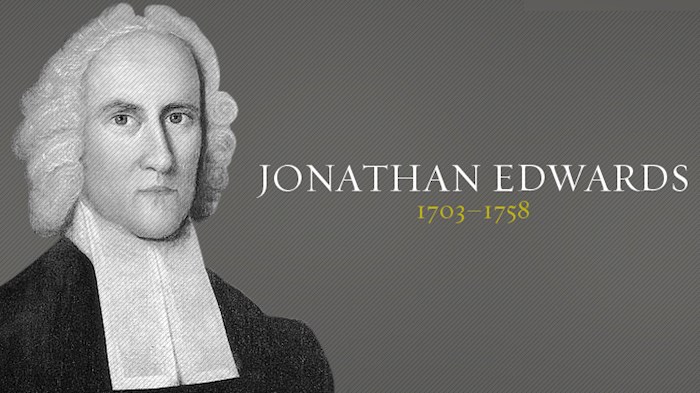
Allow me to introduce President Obama and President Bush, as well as the rest of you, to the story of the death of Jonathan Edwards (1703-1755). 

Edwards was the most well-known colonial American of his day. At age 54, he died with newspapers tracking and reporting on his experience in taking the newly invented smallpox vaccination “to build confidence” in the American people about vaccine safety. Jonathan Edwards trusted in the LORD. He was, from all accounts, a most humble man. 

Unlike the 2020 RNA vaccination for Corona, the 1755 smallpox vaccination was primitive in nature. A pustule from a sick, infected victim of smallpox would be cut open. The pus would be squeezed out and mixed with a rubbing matter.

The infected matter would be carried by a doctor to a house where healthy people lived. The doctor would make small incisions between the thumbs and index fingers of those who had never been infected with smallpox. The rubbing matter would be placed over the open cuts and wrapped with cloths. If all went well, those vaccinated would endure a mild case of the pox and go on to live healthy lives without fear of catching the full-blown disease.

The American people in Edwards’ were afraid of the new smallpox vaccination like many American people today are afraid of the new Coronavirus vaccination. 

The 54-year-old newly elected President of Princeton University wasn’t afraid. He trusted the LORD.

Jonathan Edwards was the closest thing to a celebrity that America had in 1758. Serving as a pastor before his appointment to Princeton, Edwards’ preaching had become the spark that led America to a Great Awakening.

As a teenager, Jonathan Edwards had written 70 Resolutions for Life. Every New Year’s Day,  Edwards personally renewed his pledge to live by his resolutions for life. The ninth one states:

Resolved, to think much on all occasions of my own dying, and of the common circumstances which attend death.”

For most Americans today, that resolution sounds morbid. That’s because we’ve lost the art of dying well. Actually, if applied, this resolution #9 would help all of us die as well as Jonathan Edwards did in the prime of his life.

Dr. William Shippen, a Princeton doctor who would later serve as a delegate to the Continental Congress, administered the smallpox vaccination to President Jonathan Edwards. The newspapers reported the event, hoping to encourage other New Jersey citizens to get the treatment themselves.

Smallpox

At first, things went normal. Edwards came down with a mild case of the pox, and he appeared to be on the mend.

But then smallpox spread into his mouth and throat, making swallowing difficult.

Jonathan Edwards knew that he was dying. 

He’d moved to Princeton only a few months earlier to serve as President of the school (then known as The College of New Jersey). His wife had not yet made it to Princeton. Jonathan Edwards had co-founded the school with his good friend Aaron Burr, Sr., whose sudden death by fever in the fall of 1757 had precipitated Edwards’s appointment. Edwards’ daughter, Esther Edwards, had married Mr. Burr, and their son Aaron Burr, Jr. would go on to become Vice-President of the United States. Most Americans only know of Jonathan Edward’s grandson, Aaron Burr, Jr., for his killing of Alexander Hamilton in a famous duel, an event made even more memorable by the Broadway musical play Hamilton.

As Jonathan Edwards lay on his death bed, messengers sent for his wife. But Sarah Edwards would not make it to Princeton to see her husband before he died. When Jonathan Edwards realized his wife wouldn’t make it, he called for Lucy, his daughter, who’d moved with him to Princeton. He said to her:

“Dear Lucy, it seems to me to be the will of God that I must shortly leave you; therefore give my kindest love to my dear wife, and tell her, that the uncommon union, which has so long subsisted between us, has been of such a nature, as I trust is spiritual, and therefore will continue forever: and I hope she will be supported under so great a trial, and submit cheerfully to the will of God. And as to my children, you are now like to be left fatherless, which I hope will be an inducement to you all to seek a Father, who will never fail you. And as to my funeral, I would have it be like Mr. Burr’s; and any additional sum of money that might be expected to be laid out that way, I would have it disposed of to charitable uses.”

Jonathan Edward’s had attended Mr. Burr’s funeral the previous fall and was impressed with its simplicity and charity. There were no ornate decorations, nor an ornate casket or headstone, both customary in Edward’s day.  Mr. Burr had instructed all the money that his family would save to go to charitable causes.

As the hour of his death approached, friends and Dr. William Shippen stood near President Edwards and discussed the significant loss of coming to the college, the American colonies, and the world at large through President Edwards’ death. Nobody thought Jonathan Edwards could hear the conversation, but he raised his head up from his bed and spoke clearly to the group:

“Trust in God, and ye need not fear.”

At 2:30 pm, the afternoon of March 22, 1758, Jonathan Edwards died of smallpox at 54. Dr. Shippen sent a letter to his widow:

“This afternoon, between two and three o’clock, it pleased God to let him sleep in that dear Lord Jesus, whose kingdom and interest he has been faithfully and painfully serving all his life. And never did any mortal man more fully and clearly evidence the sincerity of all his professions, by one continued, universal, calm, cheerful resignation, and patient submission to the divine will, through every stage of his disease, than he; not so much as one discontented expression, nor the least appearance of murmuring, through the whole.”

Sarah Edwards would later write to her daughter these words of comfort and encouragement: 

“My very dear Child, what shall I say? A holy and good God has covered us with a dark cloud! …The Lord has done it. He has made me adore His goodness that we had him so long. But my God lives: and He has my heart. Oh, what a legacy my husband and your father has left us! We are all given to God; and there I am, and love to be.”

In our day, when families are panicked over the possible death of loved ones and when individuals are anxious and fearful over their own mortality, it’s good for us to reflect on the past lives of God’s faithful servants and the art of dying well.

It’s also a reminder that people who trust in the LORD may die of Covid-19. People who trust in the LORD may die from vaccination. People who trust in the LORD will die, just like those who don’t trust in the LORD.

But when you trust in the LORD, you don’t fear your death

I wish President Obama and President Bush success, but if the LORD is bringing down a proud nation, the new Corona vaccinations may not turn out the way we desire.