. Sunday night after church I watched a CNBC news show called
American Greed. This particular episode focused on the largest non-profit fraud in the history of America, the scam perpetrated by Southern Baptist leaders at the
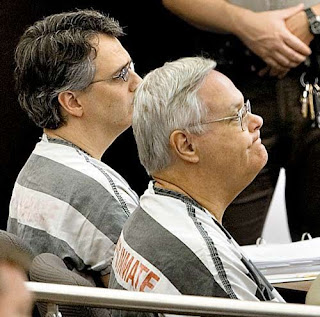
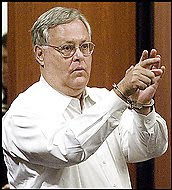
Baptist Foundation of Arizona. Senior Vice-President of BFA, Donald Dale Deardoff, Southern Baptist attorney Tom Grabinsky, and BFA President Bill Crotts (pictured here) were sentenced in early 2007 to four, six and eight years in prison respectively for their participation in the fraud and cover-up.
The fraud was a ponzi scheme, and though Bill Crott’s swears that he did not “personally” profit from any money that Southern Baptists gave to the Baptist Foundation of Arizona, that does little to comfort those Southern Baptists who had millions of dollars taken from them through fraud and deceit. Here’s how the scheme worked.
The Baptist Foundation of Arizona, through Bill Crott’s leadership, encouraged Southern Baptists everywhere to invest their money at BFA to “plant churches” and grow the kingdom of God.

Money poured in, which the BFA invested in real estate, ostensibly to use the profits to “plant churches” for the glory of God. But when some of the “investments” in real estate went sour in the early 1990’s, instead of coming clean with Southern Baptists, Bill Crotts did two really bizarre things that should have tipped people off there was a problem.
(1). First, he directed a few of his closest friends, one even happened to be a former director at the Baptist Foundation, to establish two “non-profit” companies that would do business directly with the BFA to help cover BFA’s losses. These two companies, ALO and New Church Ventures (a fancy name for a non-profit “church planting institute”), would buy and hold BFA’s overvalued real estate in exchange for notes receivable valued in the millions of dollars. In short, the Baptist Foundation cooked the books to show Southern Baptists that BFA’s real estate holdings had been “sold,” but President Bill Crotts would tell his accomplices at his newly established non-profits “Just pay us later” (wink, wink). The hope was that the value of the Arizona real estate that BFA held would rise in time, and then the BFA could cover their losses–because they never really “sold” the land in the first place, though their books said they did. Had they not fabricated these transactions through dummy corporations the BFA established, the books would have shown them insolvent. As it was, they continued to get more and more money from Southern Baptists.
(2). Second, when people began asking questions about suspicious transactions at the BFA, those high in Southern Baptist leadership used their connections to discredit the people who were asking the questions–making them the problem. All dysfunctional organizations never address real problems, they simply make the whistle blowers the problem. Southern Baptists should have known by the late 1990’s that something was amiss for several reasons:
(a). There had been a high turnover of key staff. Between April and November 1996, three high-level BFA staffers—a lawyer and two accountants—resigned in protest. They each wrote letters noting their concerns about continued deception of investors and board members and specific allegations of fraud. Yet millions and millions of dollars continued to flow to the BFA for the next several years.
(b). Major tips went uninvestigated. Shortly before the completion of the 1996 audit in February 1997, a former BFA accountant met with Arthur Andersen’s BFA audit manager for lunch. The BFA accountant had formerly prepared the financial statements of ALO and New Church Ventures. She warned the Auther Anderson audit manager responsible for BFA’s audit that entities owing BFA material amounts of notes receivables were insolvent and incapable of paying the receivables. Yet, when the audit manager met with Southern Baptist officials at BFA, THE VERY OFFICIALS INVOLVED IN THE FRAUD, he was assured that there was “no problem.” He took their word for it rather than continuing an investigation.
(c). The BFA’s nonprofit status was in peril because of their business transactions. Arthur Andersen’s tax team informed the audit team in January 1998 that unrelated business income could jeopardize the foundation’s tax-exempt status, yet nothing was done.
(d). There were numerous newspaper articles suggesting irregularities at the Baptist Foundation. The Phoenix New Times published articles on April 16 and 23, 1998, “The Money Changers,” that contained extensive allegations of fraud and insider dealings at BFA. The audit team responded by reviewing each allocation and asking management if the allegations were true. Again, BFA management assured the auditors that the allegations were not. On April 27, 1998, Auther Andersen signed off on its unqualified opinion for the 1997 financial statements.
Southern Baptists and Arthur Andersen made a huge error by ignoring the major fraud occurring at the Baptist Foundation of Arizona. Millions of dollars of Southern Baptist money was lost–maybe because Southern Baptists and others are hesitant to question anyone who says they are doing the Lord’s work and planting churches. Thankfully, three Southern Baptist officials in Arizona have now spent two years in jail for their fraud and will spend several more years in federal prison for their crimes.
Many state Southern Baptist Conventions have paid close attention to the high profile Arizona case. But it should be noted that people misusing money designated for kingdom work is not a new occurance in the Southern Baptist Convention. It has happened numerous times before the BFA fraud was discovered in the 1990’s, it has happened since, and it will happen again. I’m sure it is tempting for some in Southern Baptist leadership to try to avoid negative publicity by covering the truth when they discover that someone under their authority has stolen money intended for kingdom work.
I just remind those who wish to hide the truth that the men in Arizona went to jail precisely for that reason. Unlike some embezzlement cases in the Southern Baptist Convention that have been thoroughly documented in the past, nobody involved in the Baptist Foundation of Arizona investigation ever suggested BFA officials took money for personal gain. Their crime was an attempt to hide the loss of millions of dollars at the non-profit Baptist Foundation of Arizona by lying about it and then covering up their lies.
They deserved jail.
How much more does that Southern Baptist who takes money for personal gain deserve jail? In my opinion, a great deal more.
In His Grace,
Wade Burleson