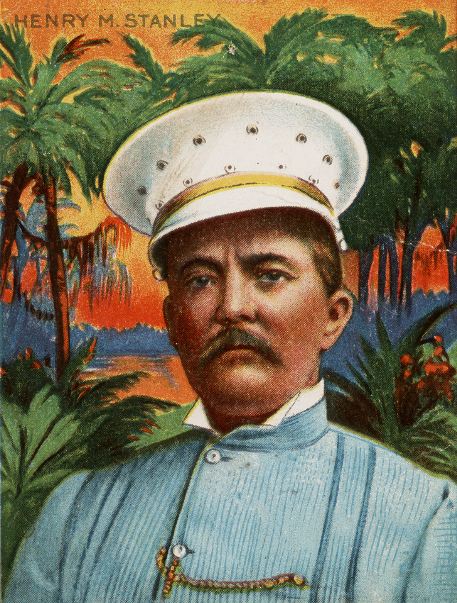
 “When I contrast what I have achieved in my measurably brief life with what Henry M. Stanley has achieved in his possibly briefer one, the effect is to sweep utterly away the ten-story edifice of my own self-appreciation and leave nothing behind but the cellar” Mark Twain
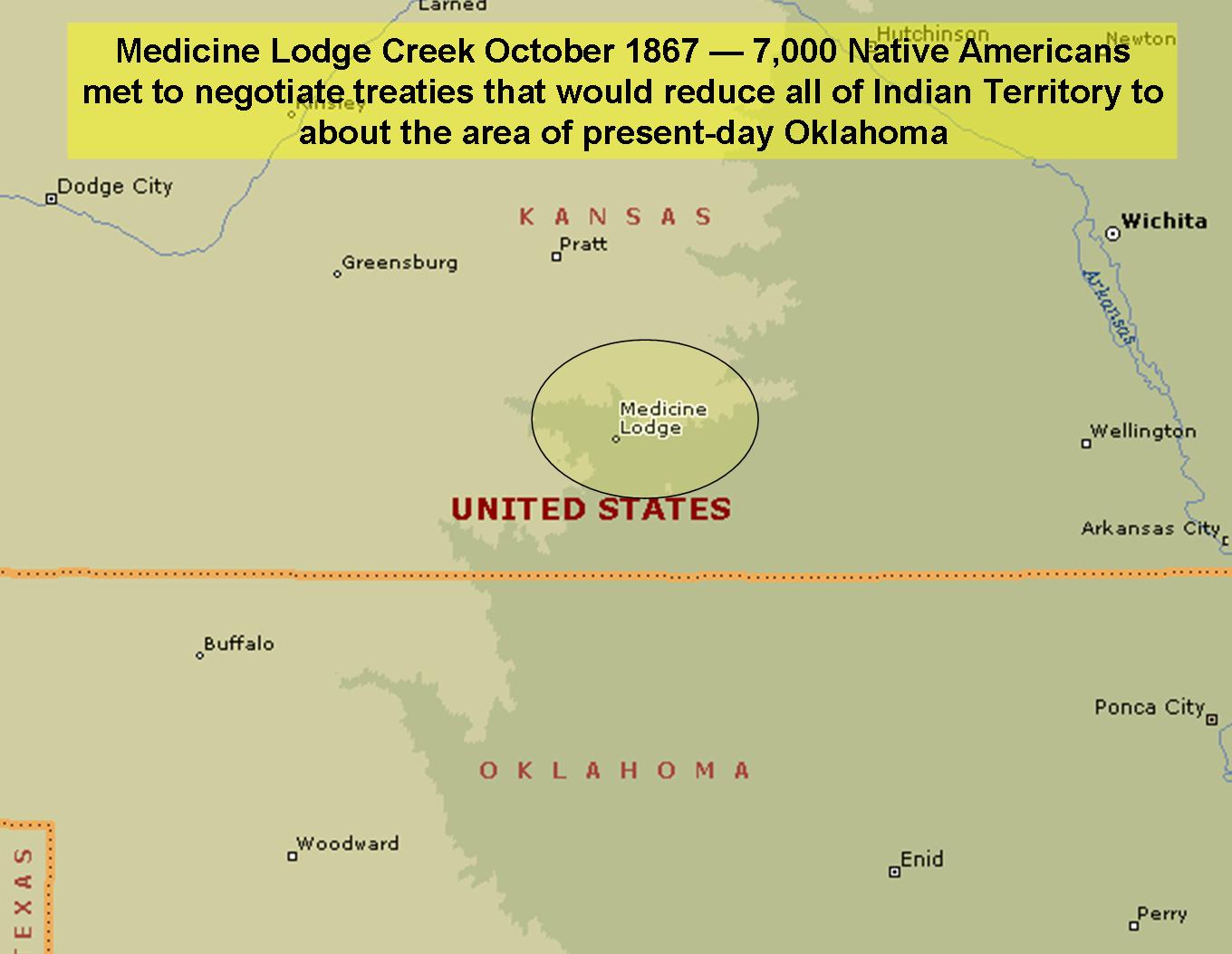
 The statement Mark Twain makes of of Henry M. Stanley is rather remarkable, considering most Americans know little or nothing about the man Twain praises. Henry Morton Stanley is most famous for uttering the words, “Dr. Livingstone, I presume?” He had been dispatched to Africa by the New York Herald in 1871 to find the famous and missing missionary and explorer Dr. David Livingstone. Livingstone had not been heard from for nearly four years, and all of England feared he was either lost or dead somewhere in the interior of Africa. Stanley led an expedition that found Livingstone alive, and upon seeing the only white man within thousands of miles, Stanley uttered his humorous and iconic query. What you may not know is that Stanley was chosen for the Livingstone expedition because of what he accomplished four years earlier in the heart of Indian Territory. In October of 1867, Henry Morton Stanley made a treacherous and dangerous journey with two hundred U.S. cavalry troops to Medicine Lodge, a Plainsmen Indian tribal site that sits directly northwest of where I live in Enid, Oklahoma. The Plainsmen Indians were at war with the United States, and it was at Medicine Lodge, in October of 1867, that negotiations for peace began. Henry M. Stanley served as the newspaper correspondent for the St. Louis Daily Missouri Democrat. He reported on the negotiations that led to the first treaties between the United States government and the Plainsmen Indian tribes (Apache, Comanche, Kiowa, Cheyenne and Arapahoe) roaming America’s southern plains. His letters detailing the Indian expedition and subsequent Peace Treaties were reprinted in many major metropolitan cities of America’s east cost. Stanley’s colorful and accurate reporting caught the eye of James Gordon Bennett, Jr, editor of the New York Herald, and Gordon hired Stanley as a reporter in 1869.
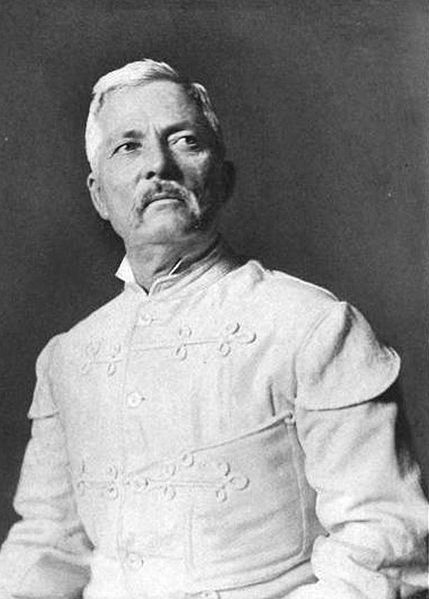 |
| Stanley in 1890 |
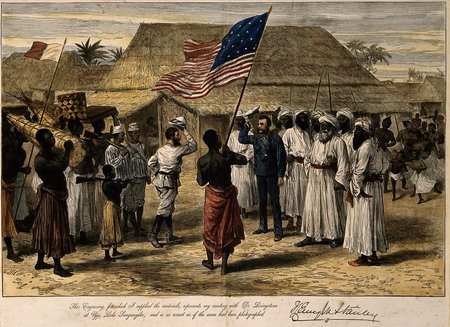 Of course, less than two years later, on November 10, 1871 Stanley found Livingstone alive! Eighteen months later Livingstone died (May 1, 1873). Henry Stanley’s fame continued to grow world-wide! He left journalism and became the premier explorer of the continent of Africa, surpassing the accomplishments of Livingstone himself. In 2008 author Tim Jeal and Yale University Press published the definitive biography of Henry M. Stanley entitled Stanley: The Impossible Life of Africa’s Greatest Explorer.
 I like to tell people that Indian Territory has some of the most colorful and fascinating history in the United States. This history is often made by people known world-wide for other reasons. For example, President Thomas Jefferson sent Lewis and Clark to explore the Louisiana Purchase and to search for the rumored Mountain of Salt. The salt mountain, which was actually a salt plain, was eventually discovered in northwestern Indian Territory (Oklahoma) by the nephew of theologian Jonathan Edwards. The first Protestant mission west of the Mississippi River, called Union Mission, was established in 1820 in Indian Territory (Oklahoma) at the location President Jefferson called Three Rivers in his 1806 speech to Congress. The missionary work among the Osage Indians at Union Mission by Epaphras Chapman excels that of David Brainard in both courage and drama. Likewise, one of the greatest missionaries in the history of Christianity, David Livingstone, was rescued by a Henry Morton Stanley, a man who became known for his courage and colorful writing while witnessing the historic Medicine Lodge Peace Treaties of 1867.
Next time you hear the phrase, “Dr. Livingstone, I presume?” remember the part Indian Territory played in Stanley’s discovery of Livingstone.